

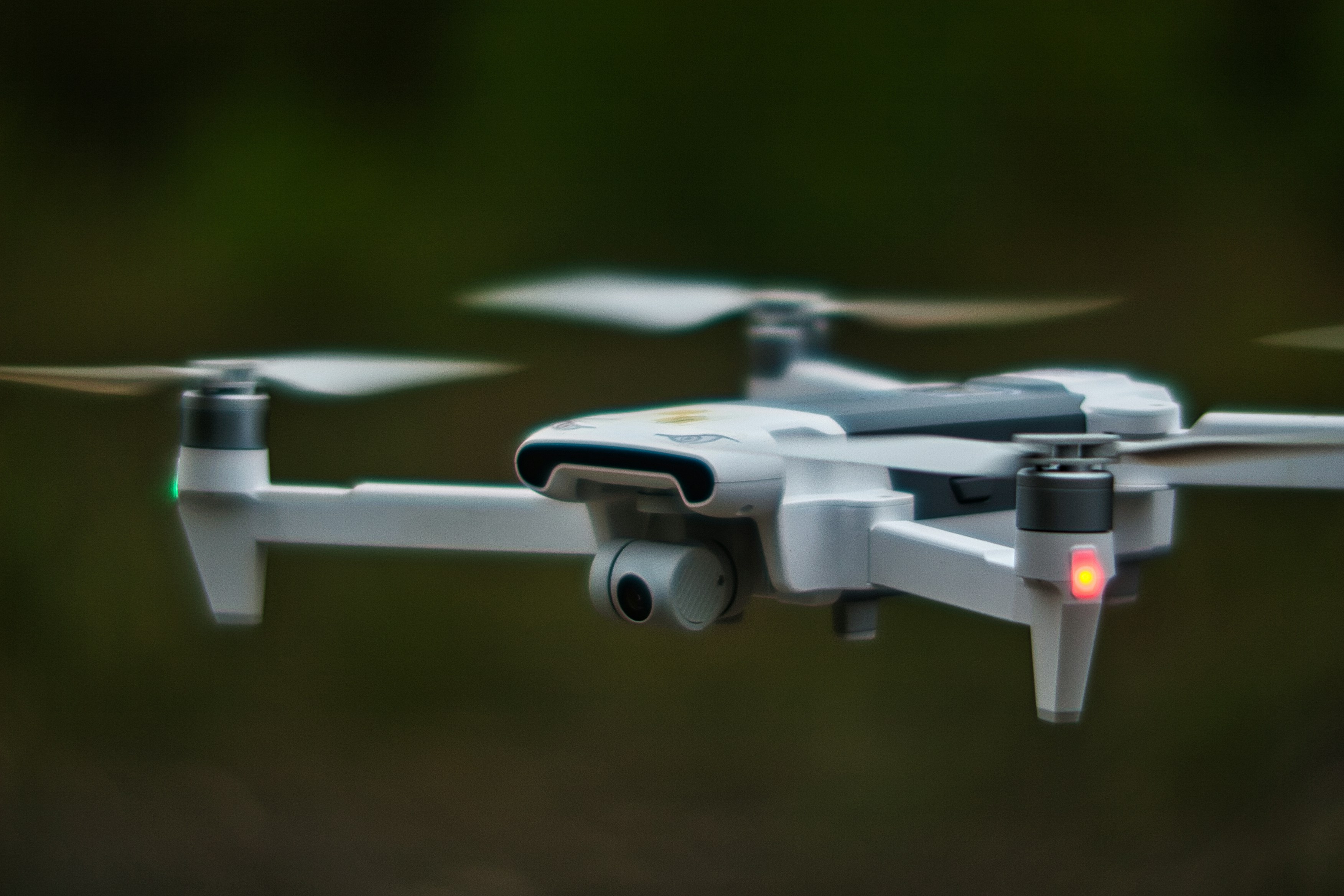
Be at the heart of actionFly remote-controlled drones into enemy territory to gather vital information.

Apply Now

Graduate Teaching Assistant

Teaching Personnel
Stoke-on-Trent
1 month ago
Applications closed

Related Jobs

View all jobs

Sales Engineer Robotics Automation

Are you a recent English graduate considering a career in teaching?

Teaching Personnel are currently working with a secondary school based in Stoke-on-Trent who are looking for a full-time Teaching Assistant to work within their English department. This is a great school who strives to create an inclusive learning environment for all its pupils.

About the role:


  • Start-date: 5th January
  • Long-term, full-time role
  • Opportunity to earn £90-£100 per day (dependent on experience)


As a Teaching Assistant, you will support within the school’s English department ensuring students who require additional learning support are able to access the curriculum. You will work closely with the class teachers to identify students who require additional support and create and implement individualised learning support. This will involve 1-1 and small group interventions, tailoring the English curriculum to each students needs.

What we’re looking for:


  • Strong background in English
  • Experience working with young people (in any setting)
  • Strong communication and interpersonal skills with both students and staff
  • A genuine passion for working with young people and improving their learning experience
  • Safeguarding training to be completed upon registering with Teaching Personnel


If you’re interested in this opportunity, we’d love to hear from you!


Please apply with your CV and a consultant will be in contact within 2 working days.

All applicants will require the appropriate qualifications and training for this role. Please see the FAQ’s on the Teaching Personnel website for details.

All pay rates quoted will be inclusive of 12.07% statutory holiday pay. This advert is for a temporary position. In some cases, the option to make this role permanent may become available at a later date.

Teaching Personnel is committed to safeguarding and promoting the welfare of children. We undertake safeguarding checks on all workers in accordance with DfE statutory guidance ‘Keeping Children Safe in Education’ this may also include an online search as part of our due diligence on shortlisted applicants.

We offer all our registered candidates FREE child protection and prevent duty training. All candidates must undertake or have undertaken a valid enhanced Disclosure and Barring Service (DBS) check. Full assistance provided.

For details of our privacy policy, please visit the Teaching Personnel website.

Subscribe to Future Tech Insights for the latest jobs & insights, direct to your inbox.

By subscribing, you agree to our privacy policy and terms of service.

Industry Insights

Discover insightful articles, industry insights, expert tips, and curated resources.

UAV & Drone Hiring Trends 2026: What to Watch Out For (For Job Seekers & Recruiters)

As we move into 2026, the UK UAV (uncrewed aerial vehicle) and drone jobs market is maturing fast. The “shiny new toy” phase is over. Public expectations and regulation are tougher, budgets are more closely scrutinised, and clients want measurable outcomes – safer inspections, faster data, lower costs, better evidence – not just impressive footage. At the same time, demand for UAV services in infrastructure inspection, construction, energy, agriculture, emergency response, defence and media continues to grow. Long-term trends like asset digitisation, smart cities, and net-zero infrastructure all rely on high-quality aerial data and remote operations. The result: fewer opportunistic one-off drone gigs, and more emphasis on professional UAV operations, data workflows and compliant, scalable services. Whether you’re: A job seeker looking for “UAV jobs in the UK”, “drone pilot jobs UK”, or “remote UAS operator roles”, or A recruiter or hiring manager trying to understand “UAV hiring trends 2026” and “how to hire drone pilots and UAS engineers”, …this guide breaks down what’s changing – and what to do about it.

UAV (Drones) Recruitment Trends 2025 (UK): What Job Seekers Need To Know About Today’s Hiring Process

Summary: UK unmanned aviation (UAV/UAS/RPAS) hiring has shifted from aircraft‑type buzzwords to capability‑driven evaluation across flight ops, autonomy, data products, safety & regulatory compliance. Employers want proof you can plan, fly, analyse and scale UAV systems safely and economically—VLOS/A2 CofC, GVC, BVLOS & SORA ops, UTM integrations, command‑and‑control resilience, sense‑and‑avoid, payload pipelines, and fleet reliability. This guide explains what’s changed, what to expect in interviews & how to prepare—especially for UAV pilots/ops managers, flight test engineers, autonomy/perception, GNC/control, UTM/backend, safety & airworthiness, data processing/analysis, and field engineering roles. Who this is for: UAV pilots & flight ops, mission planners, flight test & safety engineers, autonomy/SLAM/perception, GNC/control engineers, embedded/avionics, communications & C2 links, UTM/airspace integrations, data processing (imagery/LiDAR/thermal), GIS/photogrammetry, maintenance & field techs, and programme/product managers in the UK.

Why UAV (Drone) Careers in the UK Are Becoming More Multidisciplinary

Unmanned Aerial Vehicles (UAVs), commonly known as drones, have seen rapid adoption across sectors in the UK — agriculture, logistics, inspection, mapping, delivery, search & rescue, environmental monitoring, media, defence, and more. As UAV use proliferates, the roles supporting them are shifting. Modern UAV careers are no longer just about aerodynamics, electronics or autopilot algorithms. They now require knowledge of law, ethics, psychology, linguistics & design — because flying machines in public airspace must be safe, trusted, legal, intuitive and well communicated. In this article, we’ll explore why UAV careers in the UK are becoming more multidisciplinary, how those allied fields intersect with UAV work, and what job-seekers & employers should do to adapt.