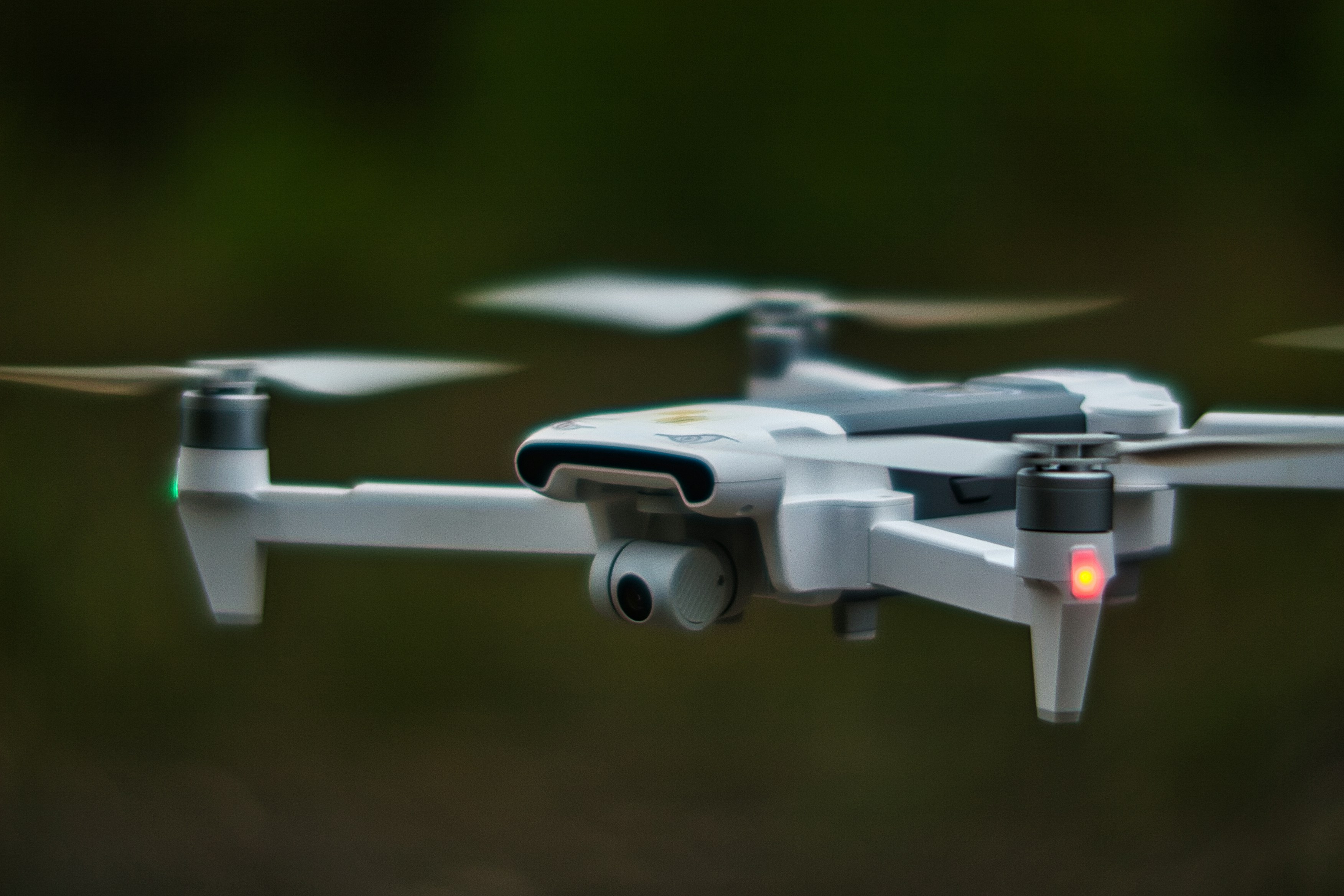
Be at the heart of actionFly remote-controlled drones into enemy territory to gather vital information.

Apply Now

Senior MLOps Engineer

Lonza
Cambridgeshire
3 weeks ago
Applications closed

Related Jobs

View all jobs

Senior or Principal Search Consultant - Engineering/Technical

Senior Systems Engineer

Senior Quantity Surveyor / Quantity Surveyor

Senior Design Engineer

Senior Engineer

Senior RF Electronics Engineer

Today, Lonza is a global leader in life sciences operating across five continents. While we work in science, there’s no magic formula to how we do it. Our greatest scientific solution is talented people working together, devising ideas that help businesses to help people. In exchange, we let our people own their careers. Their ideas, big and small, genuinely improve the world. And that’s the kind of work we want to be part of.

The role:

We seek an adept expert to contribute significantly to our R&D team, bridging machine learning engineering with applied data science. You'll improve and manage our Machine Learning Operations (MLOps) on Azure, and participate in creating, assessing, and advancing various machine learning models and AI systems.

Collaborate extensively with scientific and operational teams to guarantee the robustness, scalability, and reliability of our AI tools. Implementing automation and standardization throughout the ML lifecycle, your efforts will support quicker, data-informed decision-making and boost innovation.

Help our CDMO's mission by turning research insights into practical solutions efficiently.

Key responsibilities:

Compose, construct, and uphold resilient machine learning operations (MLOps) pipelines that facilitate the complete lifecycle of AI models—from creation to implementation and supervision.

Guarantee the successful deployment of machine learning and large language models (LLMs) in practical operational settings, transforming research findings into functional business tools.

Facilitate the progress and examination of ML models, involving both standard machine learning and neural network-focused models, as requested by R&D teams.

Develop standardized, reusable workflows that can be applied across different projects and scientific areas.

Collaborate with scientists and engineers to incorporate AI solutions into daily R&D tasks.

Implement tools for version control, testing, and continuous integration to ensure quality, security, and traceability of AI solutions.

Develop automated reporting systems that make results from AI models easier to interpret, share, and act on.

Key requirements:

MSc or BSc in Computer Science, Data Science, Bioinformatics, Engineering, or a related field, or equivalent experience.

Proven experience designing and deploying MLOps pipelines (MLflow, Azure ML, Azure DevOps etc).

Strong programming skills in Python and familiarity with common ML/AI libraries (scikit-learn, tensorflow, Keras etc.).

Experience implementing machine learning and large language models (LLMs), encompassing deployment, monitoring, and retraining.

Familiarity with software engineering guidelines: version control (e.g., Git), CI/CD, containerization (e.g., Docker), and workflow orchestration.

Knowledge of cloud platforms and scalable compute environments (Azure preferred).

Understanding of data governance, model documentation, and reproducibility in a regulated or research-heavy context.

Ability to align machine learning initiatives with business objectives in a scientific or regulated environment.

Every day, Lonza’s products and services have a positive impact on millions of people. For us, this is not only a great privilege, but also a great responsibility. How we achieve our business results is just as important as the achievements themselves. At Lonza, we respect and protect our people and our environment. Any success we achieve is no success at all if not achieved ethically.

People come to Lonza for the challenge and creativity of solving complex problems and developing new ideas in life sciences. In return, we offer the satisfaction that comes with improving lives all around the world. The satisfaction that comes with making a meaningful difference.

Reference: R70331

Subscribe to Future Tech Insights for the latest jobs & insights, direct to your inbox.

By subscribing, you agree to our privacy policy and terms of service.

Industry Insights

Discover insightful articles, industry insights, expert tips, and curated resources.

UAV & Drone Hiring Trends 2026: What to Watch Out For (For Job Seekers & Recruiters)

As we move into 2026, the UK UAV (uncrewed aerial vehicle) and drone jobs market is maturing fast. The “shiny new toy” phase is over. Public expectations and regulation are tougher, budgets are more closely scrutinised, and clients want measurable outcomes – safer inspections, faster data, lower costs, better evidence – not just impressive footage. At the same time, demand for UAV services in infrastructure inspection, construction, energy, agriculture, emergency response, defence and media continues to grow. Long-term trends like asset digitisation, smart cities, and net-zero infrastructure all rely on high-quality aerial data and remote operations. The result: fewer opportunistic one-off drone gigs, and more emphasis on professional UAV operations, data workflows and compliant, scalable services. Whether you’re: A job seeker looking for “UAV jobs in the UK”, “drone pilot jobs UK”, or “remote UAS operator roles”, or A recruiter or hiring manager trying to understand “UAV hiring trends 2026” and “how to hire drone pilots and UAS engineers”, …this guide breaks down what’s changing – and what to do about it.

UAV (Drones) Recruitment Trends 2025 (UK): What Job Seekers Need To Know About Today’s Hiring Process

Summary: UK unmanned aviation (UAV/UAS/RPAS) hiring has shifted from aircraft‑type buzzwords to capability‑driven evaluation across flight ops, autonomy, data products, safety & regulatory compliance. Employers want proof you can plan, fly, analyse and scale UAV systems safely and economically—VLOS/A2 CofC, GVC, BVLOS & SORA ops, UTM integrations, command‑and‑control resilience, sense‑and‑avoid, payload pipelines, and fleet reliability. This guide explains what’s changed, what to expect in interviews & how to prepare—especially for UAV pilots/ops managers, flight test engineers, autonomy/perception, GNC/control, UTM/backend, safety & airworthiness, data processing/analysis, and field engineering roles. Who this is for: UAV pilots & flight ops, mission planners, flight test & safety engineers, autonomy/SLAM/perception, GNC/control engineers, embedded/avionics, communications & C2 links, UTM/airspace integrations, data processing (imagery/LiDAR/thermal), GIS/photogrammetry, maintenance & field techs, and programme/product managers in the UK.

Why UAV (Drone) Careers in the UK Are Becoming More Multidisciplinary

Unmanned Aerial Vehicles (UAVs), commonly known as drones, have seen rapid adoption across sectors in the UK — agriculture, logistics, inspection, mapping, delivery, search & rescue, environmental monitoring, media, defence, and more. As UAV use proliferates, the roles supporting them are shifting. Modern UAV careers are no longer just about aerodynamics, electronics or autopilot algorithms. They now require knowledge of law, ethics, psychology, linguistics & design — because flying machines in public airspace must be safe, trusted, legal, intuitive and well communicated. In this article, we’ll explore why UAV careers in the UK are becoming more multidisciplinary, how those allied fields intersect with UAV work, and what job-seekers & employers should do to adapt.