

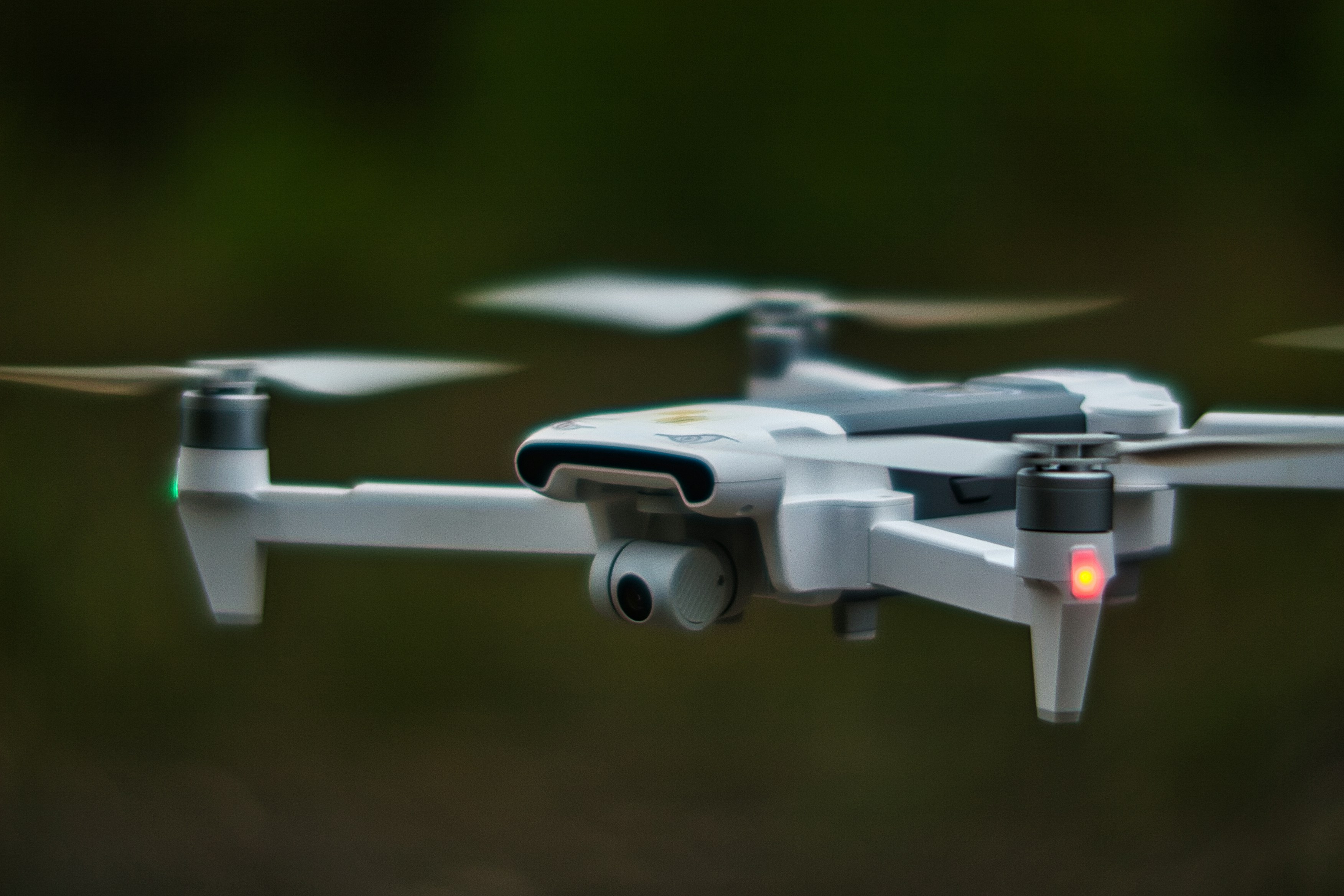
Be at the heart of actionFly remote-controlled drones into enemy territory to gather vital information.

Apply Now

(NC48) Offshore Drone Pilot

Windworkx
united kingdom
5 months ago
Applications closed

Related Jobs

View all jobs

Parts Supervisor

Retail Store Manager

Delivery Consultant (Recruitment)

Geomatics Surveyor

Group Reservations Specialist

Offshore Drone Pilot

My client launched the world’s first completely autonomous blade inspection product with a custom-designed drone system. Since then, they have inspected over 160,000 wind turbines in over 31 countries, becoming the world leader in understanding the health of turbine blades.


Hours:

Rotational shifts, typically 2 weeks on, 2 weeks off


Location:

UK / Europe


Compensation:

  • Staying in hotel and taking CTV up to £400 a day
  • Staying on SOV for the duration up to £500 a day
  • Weather rate: 75%
  • Mob/Demob: 50%
  • PPE, Accommodation, transport etc all provided.


Job Purpose:

In each week you will:

  • Deploy to customer project locations – sometimes solo, sometimes on small teams – to execute on-site wind turbine blade inspections using the SkySpecs automated drone system.
  • Communicate daily to SkySpecs and customers on project progress, upcoming logistics, technical troubleshooting details, product improvements, etc.
  • Be patient with and passionate for the most advanced commercial UAS technology on the market.
  • Charge, discharge, pack, and ship flight batteries.


Job Duties:

  • Operate drones to conduct aerial inspections and surveys of offshore wind turbines, rotor blades, and support structures.
  • Capture high-resolution imagery and video footage for analysis and reporting purposes.
  • Perform pre-flight checks and routine maintenance on drones to ensure optimal performance and safety standards.
  • Collaborate with offshore teams to schedule and coordinate inspection flights in accordance with project timelines and requirements.
  • Document and report inspection findings, including any anomalies or areas requiring further assessment or repair.
  • Adhere to safety protocols and regulatory guidelines governing drone operations in offshore environments.
  • Assist in the development and implementation of standard operating procedures (SOPs) for drone operations and data management.


Required Qualifications:

  • Relevant Drone Licences, a1-a2-a3, CAA
  • Remote Pilot Certificate or equivalent certification/license required.
  • Offshore GWOs in date
  • All medicals in date


Experience:

  • Physical agility and ability to work at heights may be required.
  • Proven experience as a drone pilot, preferably in an offshore or maritime environment.
  • Familiarity with UAVs, drone technology, and remote piloting systems.
  • Experience in conducting offshore experience.
  • Strong understanding of aviation regulations and safety procedures related to drone operations.
  • Proficiency in operating drone equipment and remote-control systems.
  • Excellent problem-solving skills and attention to detail.
  • Effective communication skills and ability to work independently and as part of a team.
  • Offshore work environment with exposure to maritime conditions and variable weather conditions.


#J-18808-Ljbffr

Subscribe to Future Tech Insights for the latest jobs & insights, direct to your inbox.

By subscribing, you agree to our privacy policy and terms of service.

Industry Insights

Discover insightful articles, industry insights, expert tips, and curated resources.

UAV & Drone Hiring Trends 2026: What to Watch Out For (For Job Seekers & Recruiters)

As we move into 2026, the UK UAV (uncrewed aerial vehicle) and drone jobs market is maturing fast. The “shiny new toy” phase is over. Public expectations and regulation are tougher, budgets are more closely scrutinised, and clients want measurable outcomes – safer inspections, faster data, lower costs, better evidence – not just impressive footage. At the same time, demand for UAV services in infrastructure inspection, construction, energy, agriculture, emergency response, defence and media continues to grow. Long-term trends like asset digitisation, smart cities, and net-zero infrastructure all rely on high-quality aerial data and remote operations. The result: fewer opportunistic one-off drone gigs, and more emphasis on professional UAV operations, data workflows and compliant, scalable services. Whether you’re: A job seeker looking for “UAV jobs in the UK”, “drone pilot jobs UK”, or “remote UAS operator roles”, or A recruiter or hiring manager trying to understand “UAV hiring trends 2026” and “how to hire drone pilots and UAS engineers”, …this guide breaks down what’s changing – and what to do about it.

UAV (Drones) Recruitment Trends 2025 (UK): What Job Seekers Need To Know About Today’s Hiring Process

Summary: UK unmanned aviation (UAV/UAS/RPAS) hiring has shifted from aircraft‑type buzzwords to capability‑driven evaluation across flight ops, autonomy, data products, safety & regulatory compliance. Employers want proof you can plan, fly, analyse and scale UAV systems safely and economically—VLOS/A2 CofC, GVC, BVLOS & SORA ops, UTM integrations, command‑and‑control resilience, sense‑and‑avoid, payload pipelines, and fleet reliability. This guide explains what’s changed, what to expect in interviews & how to prepare—especially for UAV pilots/ops managers, flight test engineers, autonomy/perception, GNC/control, UTM/backend, safety & airworthiness, data processing/analysis, and field engineering roles. Who this is for: UAV pilots & flight ops, mission planners, flight test & safety engineers, autonomy/SLAM/perception, GNC/control engineers, embedded/avionics, communications & C2 links, UTM/airspace integrations, data processing (imagery/LiDAR/thermal), GIS/photogrammetry, maintenance & field techs, and programme/product managers in the UK.

Why UAV (Drone) Careers in the UK Are Becoming More Multidisciplinary

Unmanned Aerial Vehicles (UAVs), commonly known as drones, have seen rapid adoption across sectors in the UK — agriculture, logistics, inspection, mapping, delivery, search & rescue, environmental monitoring, media, defence, and more. As UAV use proliferates, the roles supporting them are shifting. Modern UAV careers are no longer just about aerodynamics, electronics or autopilot algorithms. They now require knowledge of law, ethics, psychology, linguistics & design — because flying machines in public airspace must be safe, trusted, legal, intuitive and well communicated. In this article, we’ll explore why UAV careers in the UK are becoming more multidisciplinary, how those allied fields intersect with UAV work, and what job-seekers & employers should do to adapt.