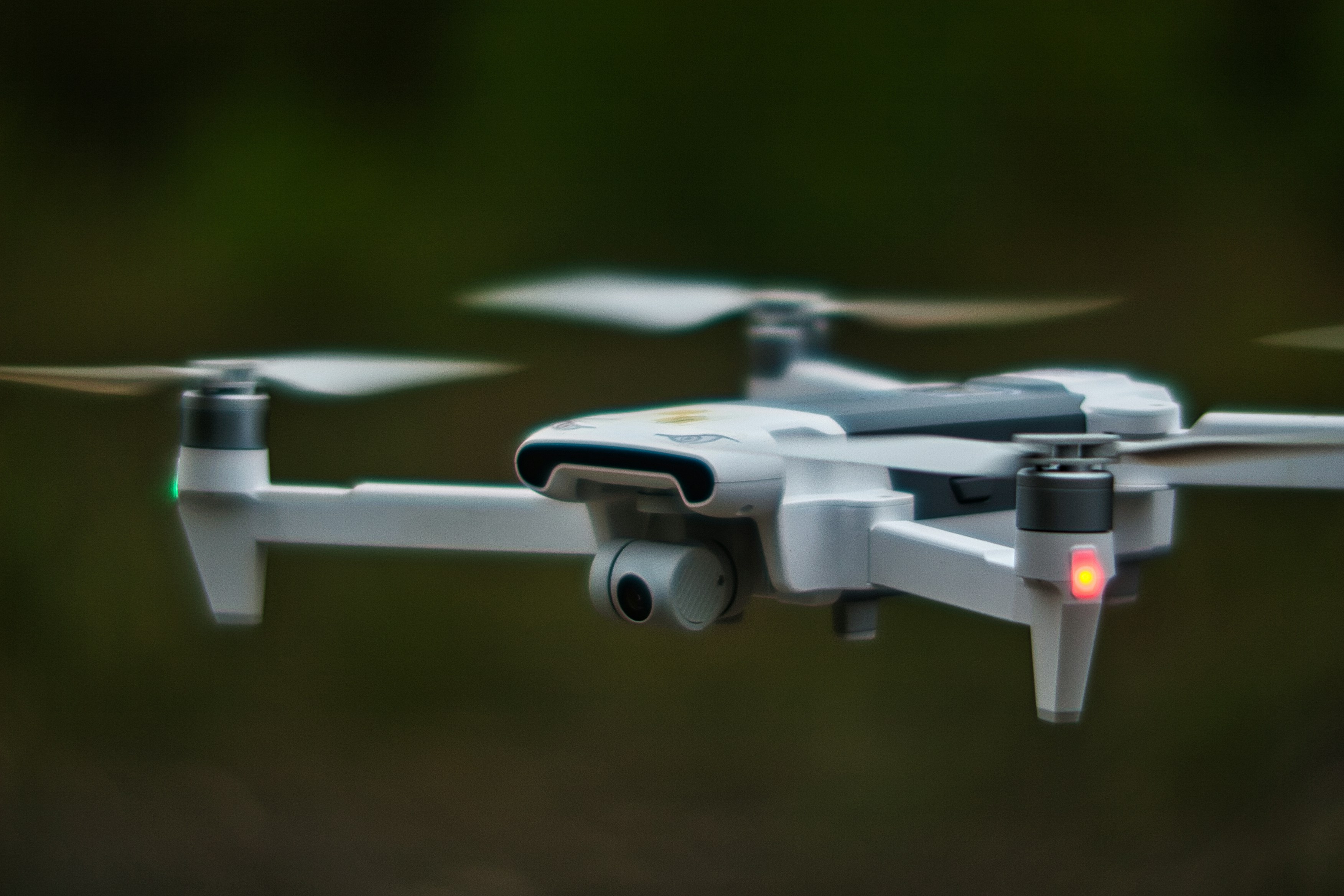

Be at the heart of actionFly remote-controlled drones into enemy territory to gather vital information.

Apply Now

Senior Systems Engineer - Aerospace & Defence

Cambridge
4 months ago
Applications closed

Related Jobs

View all jobs

Senior UAV Test Engineer

Senior Software Support Engineer

Senior Aerodynamics Engineer: Rocket Aerodynamics

Senior/Lead Propulsion Engineer

Senior Software Engineer

Aerothermal Engineers (Senior to Lead)

Senior Systems Engineer - Aerospace & Defence

Our large Defence client are seeking an experienced Senior Systems Engineer to join their dynamic engineering team working on cutting-edge aerospace and defence technology. This is an exciting opportunity to shape the future of safety-critical systems in both civil and military aerospace applications.

As a Senior Systems Engineer, you'll play a key role in developing engineering solutions to real-world, mission-critical problems-supporting our work in aircraft, unmanned systems, and soldier-worn technologies.

Key Responsibilities

Develop system-level solutions using a structured systems engineering approach.
Engage with stakeholders to define and elicit clear, actionable requirements.
Derive and decompose customer requirements into technical product specifications.
Perform requirements-based verification and validation using both manual and scripted techniques.
Produce key artefacts to meet ARP4754, DO-178 and DO-254 standards.
Create and maintain technical documentation including system design and interface control documents.
Manage engineering changes throughout the product development lifecycle.
Contribute to technical proposals and cost estimations.About You

Degree-qualified in engineering or a related scientific discipline.
Experienced in developing safety-critical systems in line with ARP4754, DO-178, and DO-254-ideally at the highest DAL level.
Skilled in using Microsoft Office tools (including Visio, Excel, Word) and DOORS. DXL scripting knowledge is a bonus.
Comfortable working both independently and collaboratively within a multi-disciplinary environment.
Strong written and verbal communication skills, with a sharp eye for detail and a systems-level mindset.Desirable Experience

Familiarity with MATLAB and Simulink.
Knowledge of change control and problem reporting processes.
Exposure to SOI audits and certification reviews.
Experience with SysML modelling and systems architecture.
Understanding of IEC61508 and military aerospace standards

Subscribe to Future Tech Insights for the latest jobs & insights, direct to your inbox.

By subscribing, you agree to our privacy policy and terms of service.

Industry Insights

Discover insightful articles, industry insights, expert tips, and curated resources.

UAV (Drones) Recruitment Trends 2025 (UK): What Job Seekers Need To Know About Today’s Hiring Process

Summary: UK unmanned aviation (UAV/UAS/RPAS) hiring has shifted from aircraft‑type buzzwords to capability‑driven evaluation across flight ops, autonomy, data products, safety & regulatory compliance. Employers want proof you can plan, fly, analyse and scale UAV systems safely and economically—VLOS/A2 CofC, GVC, BVLOS & SORA ops, UTM integrations, command‑and‑control resilience, sense‑and‑avoid, payload pipelines, and fleet reliability. This guide explains what’s changed, what to expect in interviews & how to prepare—especially for UAV pilots/ops managers, flight test engineers, autonomy/perception, GNC/control, UTM/backend, safety & airworthiness, data processing/analysis, and field engineering roles. Who this is for: UAV pilots & flight ops, mission planners, flight test & safety engineers, autonomy/SLAM/perception, GNC/control engineers, embedded/avionics, communications & C2 links, UTM/airspace integrations, data processing (imagery/LiDAR/thermal), GIS/photogrammetry, maintenance & field techs, and programme/product managers in the UK.

Why UAV (Drone) Careers in the UK Are Becoming More Multidisciplinary

Unmanned Aerial Vehicles (UAVs), commonly known as drones, have seen rapid adoption across sectors in the UK — agriculture, logistics, inspection, mapping, delivery, search & rescue, environmental monitoring, media, defence, and more. As UAV use proliferates, the roles supporting them are shifting. Modern UAV careers are no longer just about aerodynamics, electronics or autopilot algorithms. They now require knowledge of law, ethics, psychology, linguistics & design — because flying machines in public airspace must be safe, trusted, legal, intuitive and well communicated. In this article, we’ll explore why UAV careers in the UK are becoming more multidisciplinary, how those allied fields intersect with UAV work, and what job-seekers & employers should do to adapt.

UAV Team Structures Explained: Who Does What in a Modern UAV Department

Unmanned Aerial Vehicles (UAVs), commonly called drones, are transforming industries across the UK—from agriculture, surveillance, mapping, and inspection to logistics, environmental monitoring, and emergency response. UAV systems combine hardware, embedded systems, controls, autonomy, sensors, communications, regulatory / airworthiness, and operations. As the UAV ecosystem grows, companies need team structures that ensure safety, reliability, regulatory compliance, and operational readiness. If you are applying for UAV roles via UAVJobs.co.uk or building a UAV team, this article will help you understand the roles typical in a modern UAV department, how they collaborate throughout the UAV lifecycle, what skills and qualifications employers expect in the UK, what salaries look like, common challenges, and best practices for structuring teams that deliver capable UAV systems.